October 19, 2026
Part One: They Believed the Name. They Ignored The Person Who Knew.
What Tyler Shultz witnessed inside Theranos, how Elizabeth Holmes built leverage, and why investors keep overlooking founders whose credibility comes from experience rather than influence
Why does someone else's reputation make a founder worth hearing when years of firsthand experience, adversity, and actual work still cannot get an investor's attention?
The Intern in the Lab and the People With Power
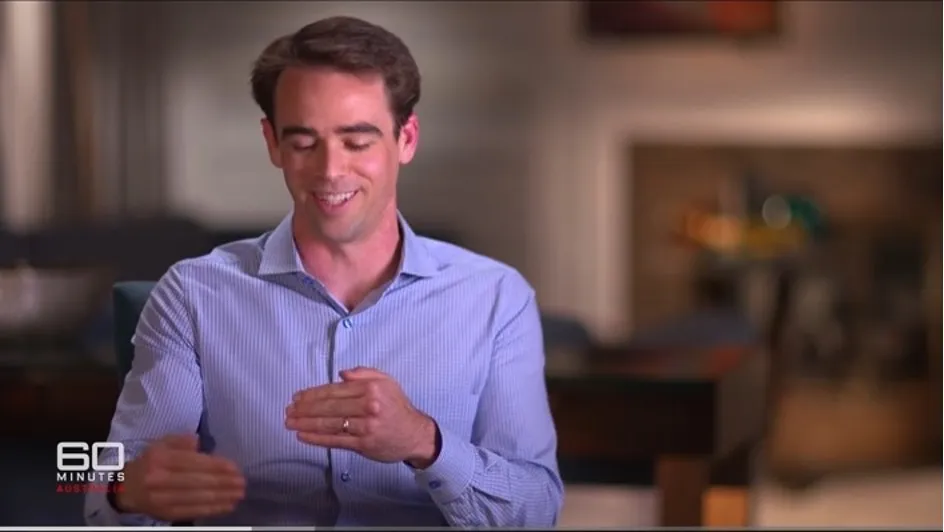
I watched Tyler Shultz talk about Theranos in the 60 Minutes Australia interview, and I kept coming back to one fact. He had worked inside the company. He was raising concerns about its blood-testing work. His grandfather, George Shultz, was a former U.S. secretary of state and a Theranos board member. Tyler had the firsthand warning. His grandfather had the famous name. For a time, the name carried more weight. [4][10][11]
Tyler had entered Theranos believing in what Elizabeth Holmes said she was building. He wanted the technology to work. That matters. His doubts came from what he encountered there, not from a dislike of the mission. When he tried to raise those concerns, he found himself arguing against a founder whom important people trusted. The dispute reached into his family. A young employee was left trying to make people hear what he had seen while the people with access and titles were still standing close to Holmes.
I am not equating my life with Tyler’s ordeal. I am asking why his story feels so familiar to people who have had direct experience dismissed in favor of someone else’s authority. Why is the person closest to the problem sometimes the last person anybody wants to hear?
Holmes did not simply persuade investors with a pitch deck. The company had a striking circle of senior figures around it. George Shultz helped introduce Holmes to influential people. That access mattered to the company’s rise, although nobody can honestly trace every later investment to one man’s introduction. It is also wrong to claim that every board member knew about the fraud. What is established is serious enough. The Securities and Exchange Commission said Theranos and its leaders raised more than $700 million by misleading investors about the technology and business. Holmes was later convicted of federal investor-fraud offenses. [1][2][10]
What stayed with me was not the money. It was the distance between being believed and being right.
There was a man working close to the product, asking questions that deserved answers. And there were influential people whose belief in the founder had become difficult to dislodge. Their reputations did not make the blood-testing claims true. Tyler’s youth did not make his concerns less deserving of review.
That is the part of the story I want investors to sit with. When they hear a name they already respect, a door can open almost automatically. When they encounter a founder with no famous person beside her, the door can stay shut before a single question has been asked about the work.
I am not asking anyone to fund me because I have suffered. I am asking why investors so readily understand the business value of an introduction from someone powerful, yet often struggle to value the knowledge of a founder who has spent years living with the exact problem her company is trying to address.
Whose experience counts as credibility before the money arrives?
George Shultz Opened Doors. Tyler Shultz Asked for Proof.
George Shultz’s connection to Holmes is important because it brought two very different kinds of knowledge into the same room. He had a distinguished public career and a network of influential people. Tyler had worked at the company and questioned what he saw. Both men mattered to the story. Only one had reason to know what was happening in the lab from direct exposure.
Accounts of Tyler’s experience describe a painful break between him and his grandfather. George continued to support Holmes as Tyler raised concerns. The 60 Minutes Australia report gives the family dispute a face, but it raises a question much larger than their family. When people have already decided a founder is exceptional, how willing are they to hear evidence that the product falls short? [4][10][11]
There is nothing wrong with knowing someone important. I would welcome thoughtful advisers, respected physicians, strong business partners, and investors with serious experience. Every company benefits from people who can help it avoid mistakes. What troubles me is the point at which a name begins to do the work that evidence ought to do.
A former secretary of state can be a wise adviser on public affairs. He cannot certify a medical test through personal belief. An investor who sees a famous director on the board should still want the laboratory data. A partnership announcement should lead to questions about what the partner actually tested and approved. A brilliant presentation should make people curious, not satisfied.
Theranos should have taught health care investors a simple lesson: a connection may get a founder into a meeting, but it should never decide whether the product works.
There is another lesson that receives far less attention. What happens to founders who never get that first meeting? How many people have built something substantial while carrying the costs that a famous sponsor can make disappear for somebody else? No one can count every opportunity that never reached an investment committee. That absence is part of the trouble. A company rejected after careful review leaves a decision behind. A company never read is invisible.
I have had to learn how to get through systems that were difficult to move through even when I was ill. I have had to keep explaining complex conditions to people who wanted simpler answers. Later, when I began building Healveda Care, I had to learn a different language: product plans, developers, clinical partners, budgets, recruitment, funding applications, patient needs, and the practical details that turn an idea into a service.
None of that means an investor must agree with my business case. It means my business case should be allowed to stand on its own. If someone believes it needs work, show me where. If the technology needs proof, ask for it. If the economics do not hold, put that concern on the table.
But do not tell me to find someone with a more recognizable surname before you are willing to consider whether the work has value.
Tyler’s warning should have been tested because of what he knew, not dismissed because of whom it challenged. The same principle belongs in founder selection. Ask what a person knows. Ask what she has done. Ask what she has built. The surname can wait.
A Famous Name Can Get a Meeting It Cannot Make a Medical Test Work
When I think about the money, the board, and the promises of Theranos, I think about the years I spent trying to be heard by people with credentials I respected. Being certain is not the same as being correct. I needed physicians to listen to the facts of my case; Theranos investors needed to ask whether the company’s equipment could do what it said. The situations differ, but the duty to check the work should not change.
A network is not inherently suspect. We all rely on trust when we make decisions under uncertainty. The problem begins when borrowed trust becomes a substitute for looking at the work. Theranos illustrated that danger through claims about the capabilities of its analyzer, the use of third-party instruments for much of its testing, and false assertions regarding validation and commercial relationships. Those were matters that required a close look at the test data and supporting documents, not reassurance from the cap table. [1][2][3]
That much money should have made investors ask harder questions. More than $700 million raised is a measure of capital secured, not technology validated. Investment can fund research, recruitment, equipment, trials, and infrastructure. It can also magnify a story that has not yet been proven. That is why announcing a financing round does not settle an argument about a product, and why an investor who points to other investors has not completed independent review.
Confidence built on reputation can feed itself. A recognizable name joins the board. A reporter describes the distinguished board. A new investor encounters the coverage. A partnership conversation begins because the company appears established. The resulting attention then becomes fresh evidence of apparent momentum. These patterns can occur in legitimate companies as well as troubled ones; they do not by themselves prove misconduct. Their danger is that they make the appearance of outside approval grow faster than the facts behind it.
In health care, the cost of that confusion is unusually high. A patient does not need a company to look credible; a patient needs the relevant services to be reliable. The press release can describe a medical revolution. The test must still work. The founder can promise to reduce patient suffering. The system must still demonstrate what it can do, who is responsible, and where it stops.
I want Healveda Care held to that standard. I want a skeptical investor to ask which parts of our care-coordination plan have been built, what remains in development, what has been piloted, which clinicians are actively participating, and how we plan to measure improvement. I want those questions because I am not asking anyone to replace laboratory evidence with sympathy for me. I am asking that the same appetite for review be extended to a company whose founder is not already vouched for by powerful people.
What is the point of demanding proof from an outsider while allowing an insider’s endorsement to perform the role of proof? Proper diligence should be harder than attending the right dinner and fairer than refusing to meet a founder who was not invited.
Investors Cannot Back the Founders They Refuse to See
Investors have a hard job. They cannot fund every founder. A promising idea can fail because the price is wrong, the market is too small, the team cannot deliver, patients do not use it, clinicians will not adopt it, reimbursement is uncertain, privacy rules are misunderstood, or the money runs out before a company learns what works. A responsible investor will ask hard questions. I want those questions.
What I question is a decision made before the questions begin.
A founder arrives with the right referral and gets thirty minutes. Another founder has spent years studying the problem because she had to survive it, has recruited developers, has early users, and is trying to build the next stage. She cannot reach anyone who will read beyond the first line of her message. No formal rejection follows. The meeting never happens.
One study in the Journal of Financial Economics, based on responses from venture capitalists, found that investors often place very high weight on the management team when making decisions. That is understandable. It also makes the question of how investors judge a management team impossible to ignore. A familiar background can feel easier to evaluate than a different path. The study does not establish why any investor has declined to invest in Healveda. It does show why the way investors judge management teams matters so much. [5]
I did not come out of illness with a famous name behind me. I came out of appointment rooms where I had been told there was little more to do. I came out of clinics where my case did not fit the work they were prepared to take on. I cannot know whether time, reimbursement, clinical uncertainty, or something else drove any one decision. I came out of years spent tracking my own health, asking questions, searching for answers, and making choices that affected whether I could function the next day.
To an investor, that may look like an unusual founder biography. To me, it was the beginning of the product research. I did not call it research at the time. I was trying to live.
I know that story alone does not prove that Healveda Care has a viable model. There must be a useful product. People must want it. The service must be safe. The price must make sense. The team must be able to deliver. Those are fair requirements. But my path into the problem should be treated as a source of firsthand knowledge, not a reason to assume I lack the right credentials.
The best investors say they want people who notice what others miss. They praise persistence and independent thinking. They celebrate founders who challenge established industries. Then some of their first screens favor people who already have a place inside established circles.
I want to know where that leaves the founder who had to become resourceful because nobody came to help. Where does the founder who built her own working knowledge belong? How is that ability weighed against a glowing introduction from someone who has never personally faced the problem?
The answer cannot be that suffering makes a company worthy of a check. It can be that a hard-earned understanding of a problem deserves the same serious review as an easy introduction. Investors can say no after that review. What they should question is how many useful ideas never reach it.
Ask What a Founder Knows, Not Who Introduced Her
Early investors often have to judge a company before long term results exist. The founder’s questions can reveal whether she has spent enough time with the problem. Can she explain who faces it, when it appears, and how people deal with it now? Does she know which parts the company can change and which depend on outside organizations? Can she name the facts that would prove her early beliefs wrong?
Her response to correction matters too. A founder who has lived with a problem may hold strong views, but experience should not close the discussion. Healveda Care must listen to patients whose histories differ from mine and to professionals who understand the limits of their work. The company must change course when facts show that an early idea does not work.
Founder credibility does not come from one source. Access determines who takes the call. Knowledge determines whether the founder understands the problem. Delivery shows what she can build. Judgment appears when plans fail or new facts arrive. Results show whether the product helps the people using it. Investors often see access first because a referral can be placed in an email. The other forms take time to earn.
A referral proves that someone was willing to make an introduction. It does not prove that the product works. Lived experience proves that the founder was close to the problem. It does not prove that her answer will work for other people. The company still has to show what it built, what people use, and what changed for them.
There is a fair way to judge a founder nobody has heard of. Start with what she knows. Check how she learned it. Look at what she has produced and how she handles facts that challenge her view. Then decide what proof the next stage requires. That process gives strong founders a chance without lowering the standard for the company.
The Patient Is Doing Unpaid Coordination Work
I know this part of health care intimately because much of it once took place in my own calendar, my own folders, and my own exhausted attempts to get two offices to speak to each other. Before Healveda was a business idea, these were the tasks I was doing simply to stay in care.
Consider a person living with several chronic conditions. The primary care clinician manages general health. A rheumatologist evaluates inflammatory symptoms. An endocrinologist manages thyroid disease. A gastroenterologist addresses digestive complications. Another specialist assesses an emerging concern. Each clinician may be conscientious, capable, and responsible within the time available in an appointment. The person who has to bring the pieces together is often the patient.
That patient may need to assemble laboratory reports, explain medication changes, clarify an earlier recommendation, chase an authorization, reconcile two different plans, remember which clinician wanted follow-up, and determine whether an unanswered message has clinical results. None of these activities is a substitute for medical judgment. All of them can determine whether medical judgment reaches the patient in a usable form.
The Agency for Healthcare Research and Quality identifies coordination as a key strategy for effectiveness, safety, and efficiency. Its work on care coordination covers accountability, communication, transitions, proactive planning, follow-up, self-management support, and links to community resources. The agency also describes the problems of disease-specific care systems for people with multiple chronic conditions. These are not invented problems in search of a startup. They are recognized concerns in health care delivery. [6][7][8]
What remains uncertain is which service works best for which people, under what circumstances, at what cost. Coordination is a broad term. A service that sends an appointment reminder is not equivalent to one that resolves conflicting specialist recommendations. A consolidated dashboard may make information easier to see without making clinicians responsible for acting on it. A care navigator may improve access but struggle to scale. A technology platform may reduce manual work in one practice while creating new tasks in another.
This is why I resist the idea that any health care app that mentions patient support has answered the coordination problem. A patient does not become supported simply because a company transfers more administrative work to a smartphone. Real improvement would mean that responsibilities become clearer, information reaches the person who needs it, delays become visible, and the patient is no longer the only participant expected to discover what has gone wrong.
Healveda Care is being designed around that distinction. Its aim is not to give patients another place to store their problems. Its aim is to help make the activities between appointments more coherent. The question we must answer through implementation is whether that design actually reduces the work patients must do and improves follow through in the settings where people actually receive care.
Complex Illness Does Not Fit a Thirty-Second Pitch
My conditions never made a good short pitch. I could not give someone a single symptom, one test, one specialist, and a tidy recovery. Even after finding care that helped, much of what I needed was coordination across people who saw only part of the picture.
The health care stories that travel fastest often have a neat structure. A condition is identified. A technology detects it. The patient receives an answer. The result appears on a screen. Investors can picture the service, the transaction, and the scale. Such technologies can be immensely valuable when they are valid and responsibly deployed. But many problems in chronic illness do not resolve at the speed of a demo.
Symptoms change. Laboratory findings vary in significance. Treatments require adjustment. Coverage changes. A treating professional leaves a practice. A patient relocates, loses transportation, becomes exhausted, or cannot make another call during business hours. Several medical issues may be addressed simultaneously, with trade-offs no single specialist can settle independently. These realities do not make complex patients commercially uninteresting. They make the design of a reliable service more demanding.
A clinically thoughtful product must account for discontinuity. It must distinguish urgent from routine concerns without claiming the role of an emergency department. It must respect the clinical authority of licensed professionals while helping the patient understand whose next action matters. It must avoid turning every symptom into an automated alarm. It must be accessible to someone who has limited energy, low technical confidence, or difficulty processing dense instructions after a medical appointment.
The temptation is to hide that complexity from investors until the product seems beautifully simple. The opposite temptation is to overwhelm them with every possible patient pathway and claim that the platform will handle all of them. Neither is a responsible strategy. The answer is to choose a specific use case, document it carefully, and show what changes when the product participates.
For Healveda, a sensible early focus could be a limited population of people managing thyroid, hormonal, autoimmune, and overlapping chronic concerns who need coordinated follow-up among multiple professionals. This is a proposed strategic focus, not a claim that one protocol fits everyone with these conditions. The first objective is not to solve every clinical problem. It is to identify recurring failures in communication, tracking, and care-plan completion that a service with clear limits can address.
The more demanding the care setting, the less room there is for decorative promises. Success may look modest in a promotional video and profound in a patient’s week. It may be the difference between having to call four offices and knowing exactly who is responsible for the next step. That result deserves to be defined, tested, and valued even if it never looks cinematic.
When Follow-Up Fails, Patients Pay the Price
A patient may have the strength to keep asking for help one week and be too ill to chase another referral the next. I know that difference. It is one reason I refuse to treat follow-up as a decorative feature.
Continuity of care is sometimes presented as a pleasant customer experience: fewer repeated forms, quicker appointment booking, a more welcoming interface. These things matter, but the word should carry much greater weight. The question is what happens to responsibility when one encounter ends and another begins. If a laboratory finding needs follow-up, who is watching? If a specialist changes a medication, who ensures the change is understood by others involved in care? If a referral stalls, at what point does delay become visible to someone capable of acting?
Every health care organization has boundaries. A practice cannot monitor everything happening in a patient’s life. A software company cannot promise that clinicians outside its network will respond. A patient may decline to share information. Coverage, geography, and capacity determine what services can actually be offered. A credible coordination model acknowledges those limits and defines its commitments within them.
That is the reason a careful design begins with ownership of tasks rather than the appearance that everything is connected. It should be clear when a request has been made, who received it, whether a response is pending, and what happens if the expected response does not arrive. It should show the difference between an appointment scheduled and an appointment completed. It should distinguish information entered by a patient from information reviewed by a licensed clinician. It should disclose when an action cannot be confirmed.
In some circumstances, a timely reminder is enough. In others, a delay may require a trained professional to make a phone call, escalate an issue, or explain available options. These functions cannot be promised without resources and practical design. An app cannot responsibly claim that an unresolved item is being managed if no one has accepted responsibility for managing it.
Healveda’s ambition is to make that invisible work visible, assign it appropriately, and learn which tasks can be standardized without sacrificing judgment. That is a safety-oriented ambition. It also creates a difficult product-development discipline: an unresolved item should remain unresolved in the system until it is resolved in the world. A reassuring green checkmark can be dangerous when it describes a click rather than a completed service.
The standard I want is demanding because patients deserve precision. The success of continuity should be judged at transitions, not in screenshots. A company should be able to say where the responsibility begins, where it ends, and what evidence shows that a handoff occurred.
I Learned This From the Other Side of the Appointment Desk
My authority did not begin with a health care startup. It began long before I had a team, a product plan, or a funding goal.
When I was a child, I lived with epilepsy. At nineteen, I experienced a severe medical crisis that kept me in the hospital for months. Later came autoimmune and thyroid problems and years of trying to understand how overlapping conditions affected my life. My medical history is personal, and I am telling it here as my account. It was not a neat progression from diagnosis to treatment to resolution.
I learned what happens when a doctor sees only the condition that sits inside that doctor’s specialty. I learned how easily a patient becomes responsible for explaining what the previous specialist said. I learned to save documents, track symptoms, study what was being recommended, seek other views, and pay attention when a treatment plan did not match how I was doing. It was exhausting work. It was also work that needed to be done.
Some medical professionals helped me. I would not erase them. Others dismissed concerns I was struggling to communicate. Clinics turned me away. I cannot establish what motivated every refusal. I know how those refusals felt and what they required of me. My problems were complex. They did not arrive with an easy answer, a short appointment, and a predictable result. I was often the one left finding the next place to call.
The lesson was repeated until I could no longer miss it: getting an appointment is not the same as getting care. Receiving instructions is not the same as having the means to follow them. Being told to see another specialist does not mean the two professionals will ever speak to each other.
Along the way I found approaches to care, movement, and daily management that made a difference in how I felt and functioned. I achieved improvements in my own health that mattered to my ability to live and work. I worked hard for those changes. I describe them as improvements in my own health, not as outcomes delivered by Healveda Care and not as proof that my approach would work for another patient. Some choices were made with clinical guidance; any medical claims would need to be supported by the right records and professional review.
That difference matters because I watched what happened when Theranos sold certainty it had not earned. I have no interest in copying that mistake from the opposite direction. My experience taught me about what patients need. It does not entitle me to claim a medical product works before it has been tested.
What it does entitle me to say is that the work of finding your way through illness is real work. When a patient has to carry it alone, that burden changes what treatment is possible. When someone who has lived through it begins building a better way for patients to communicate and follow through with care teams, investors should at least be willing to ask what she has learned.
I did not attend a course called How to Survive Fragmented Care. I lived it. I made wrong turns. I found people who could help. I had to start again when care stopped. What I eventually built out of that knowledge was the first outline of Healveda Care.
The app came much later. The understanding came first.
In Part Two, I turn from Theranos and the people who were believed to the question I have spent my life answering: what happens when no one will take on a complicated patient, and she has to find the way herself?
Sources and reporting
Theranos claims in this article draw on the reporting and primary sources below. My medical experience and the progress I describe in my own life are personal accounts. Healveda Care features still being built are plans, not finished capabilities. Business figures are founder-reported and should be checked against supporting records. No investor’s private reason for passing on Healveda has been verified.
1. U.S. Securities and Exchange Commission, Elizabeth Holmes, et al. and Ramesh “Sunny” Balwani, March 19, 2018. https://www.sec.gov/enforcement-litigation/litigation-releases/lr-24069
2. U.S. Department of Justice, Theranos Founder Elizabeth Holmes Found Guilty of Investor Fraud, January 4, 2022. https://www.justice.gov/usao-ndca/pr/theranos-founder-elizabeth-holmes-found-guilty-investor-fraud
3. U.S. Department of Justice, Elizabeth Holmes Sentenced to More Than 11 Years for Defrauding Theranos Investors, November 2022. https://www.justice.gov/usao-ndca/pr/elizabeth-holmes-sentenced-more-11-years-defrauding-theranos-investors-hundreds
4. 60 Minutes Australia, How a Theranos Whistleblower Was Betrayed by His Family, original broadcast/video published July 18, 2022.
5. Gompers, Gornall, Kaplan, and Strebulaev, How Do Venture Capitalists Make Decisions?, Journal of Financial Economics 135(1), 2020. https://www.sciencedirect.com/science/article/pii/S0304405X19301680
6. Agency for Healthcare Research and Quality, Care Coordination Measures Atlas Update. https://www.ahrq.gov/ncepcr/care/coordination/atlas.html
7. Agency for Healthcare Research and Quality, Advancing Patient-Centered Care for People Living With Multiple Chronic Conditions. https://www.ahrq.gov/patient-safety/settings/long-term-care/resource/multichronic/mcc.html
8. Agency for Healthcare Research and Quality, Care Coordination Measures Atlas, Chapter 3. https://www.ahrq.gov/ncepcr/care/coordination/atlas/chapter3.html
9. U.S. Food and Drug Administration, Clinical Decision Support Software Guidance, January 2026. https://www.fda.gov/regulatory-information/search-fda-guidance-documents/clinical-decision-support-software
10. ABC News, Theranos Whistleblowers Filed Complaints Out of Fear of Patients’ Health, 2019. https://abcnews.com/amp/Business/theranos-whistleblowers-filed-complaints-fear-patients-health-started/story?id=61030212
11. Fogarty Innovation, Principled Decision Making: A Fireside Chat With Tyler Shultz. https://www.fogartyinnovation.org/principled-decision making-a-fireside-chat-with-tyler-shultz/
12. ABC News, Ex-Theranos CEO Elizabeth Holmes Says “I Don’t Know” 600-plus Times in Deposition Tapes. https://abcnews.com/Business/theranos-ceo-elizabeth-holmes-600-times-broadcast-deposition/story?id=60576630